 Halvus
Vacuum sealing at home: what it does, and what it does not
A vacuum sealer is one of the most useful small tools in a kitchen that cooks in batches. It is also easy to expect too much of it. Here is where it helps, and where it does not.
9 September 2026 · 5 min read
What it is good at
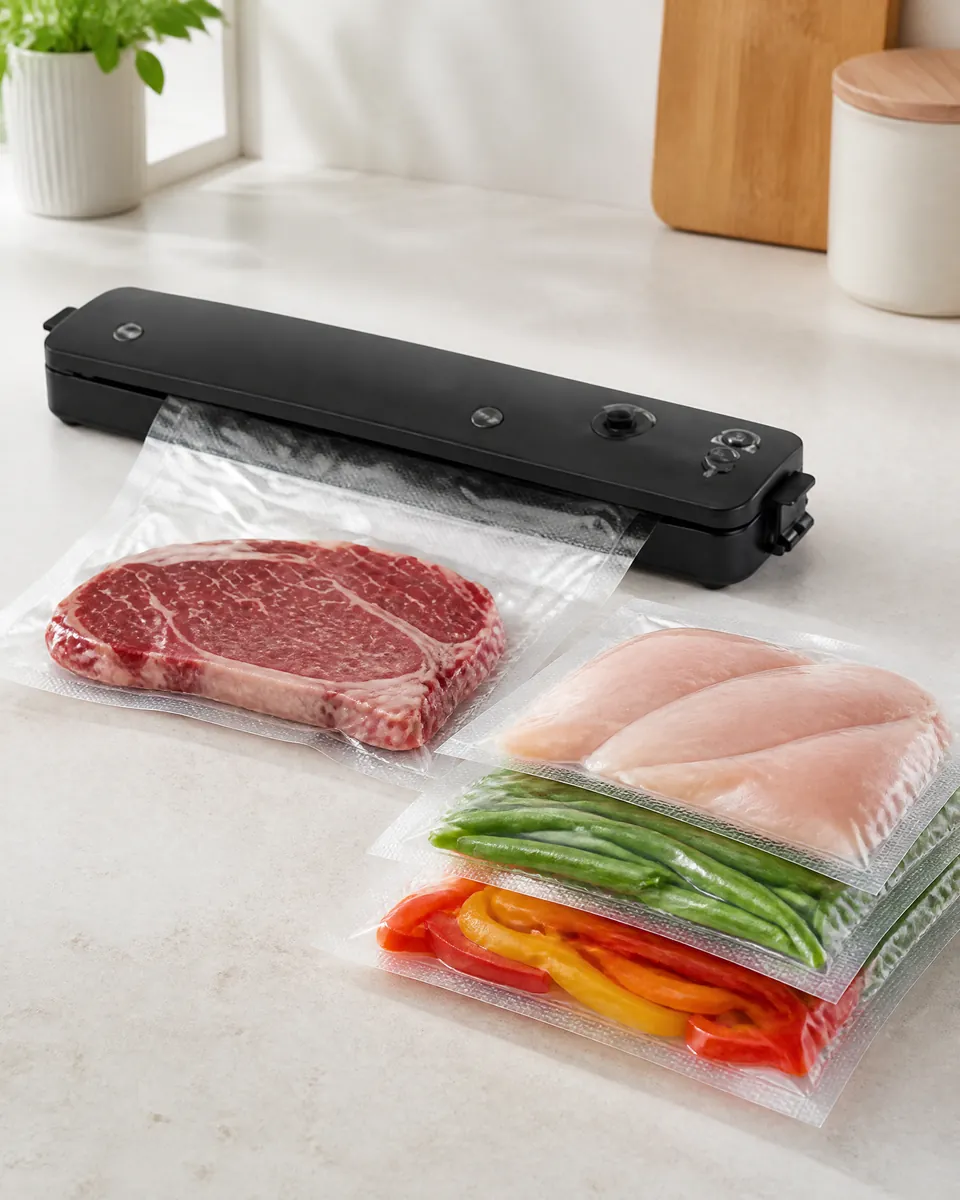
The sealer pulls most of the air out of a bag and then melts the open end shut. With the air gone and none able to get back in, frozen food is far less prone to freezer burn, the dry, greyish patches that appear when the surface dries out and oxidises. Flat sealed bags also stack neatly and take less room than boxes.
- Portions: split a large pack of meat, fish or vegetables into single meals before freezing.
- Batch cooking: freeze stews and sauces in flat, easy-to-thaw slabs.
- Marinating: the bag holds the marinade tight against the food, so a little goes a long way. Keep it in the fridge while it marinates.
- Dry goods: coffee beans, nuts and hard cheese stay protected from air and moisture.
What it does not do
Removing the air does not make food safe to keep at room temperature, and it does not kill bacteria. Some bacteria, including the one that causes botulism, grow without oxygen. Vacuum-sealed fresh or cooked food therefore belongs in the fridge or the freezer, exactly as it would in ordinary packaging.
- In the fridge, keep to the use-by date on the original pack; sealing does not extend it.
- Never store vacuum-sealed perishable food in a cupboard.
- Thaw sealed food in the fridge, not on the worktop.
Wet foods and liquids
The pump draws air towards the sealing strip, and it will draw liquid the same way. Liquid on the strip stops the bag from sealing properly. Two simple fixes:
- Freeze soups, stews and sauces in a container or an open bag first, then seal the frozen block.
- For marinated or juicy food, fold the top of the bag back like a cuff while you fill it, so the sealing area stays clean and dry, and leave a good gap between the food and the opening.
Soft and delicate foods
The vacuum presses hard on whatever is inside. Berries, bread, burger patties and fish fillets can be crushed out of shape. Spread them on a tray and freeze them for an hour or two until firm, then seal.
Bones and sharp edges
Chop bones, shellfish and dry pasta can pierce the bag as the air comes out. Fold a piece of kitchen paper over sharp ends before sealing, and check the bag is still tight after a day in the freezer.
Getting a good seal every time
- Use textured (embossed) vacuum bags. Smooth freezer bags have no channels for the air to escape, so this type of sealer cannot empty them.
- Leave about 5 cm of empty bag between the food and the end you seal.
- Lay the open end flat and straight across the sealing strip, with no creases.
- Give the machine a short pause between bags so the strip can cool.
- Write the contents and the date on the bag before it goes in the freezer.
- Do not reuse bags that have held raw meat or fish.
In the box: the Halvus vacuum sealer comes with ten 17 × 25 cm bags, enough to try out portions and marinades before buying more.
This guide is general food-storage advice. Follow the manual supplied with the sealer, and more safety points are on guarantee and safe use.